

(Description)
A fully deployed, enterprise‑grade ERP ecosystem now powers the company’s operations across Oman, UAE, KSA, and regional offices. Built with React.js, Laravel, Python, and MongoDB/MariaDB, the platform delivers a seamless, unified workflow experience through secure RESTful APIs and a modular architecture designed for long‑term scalability.
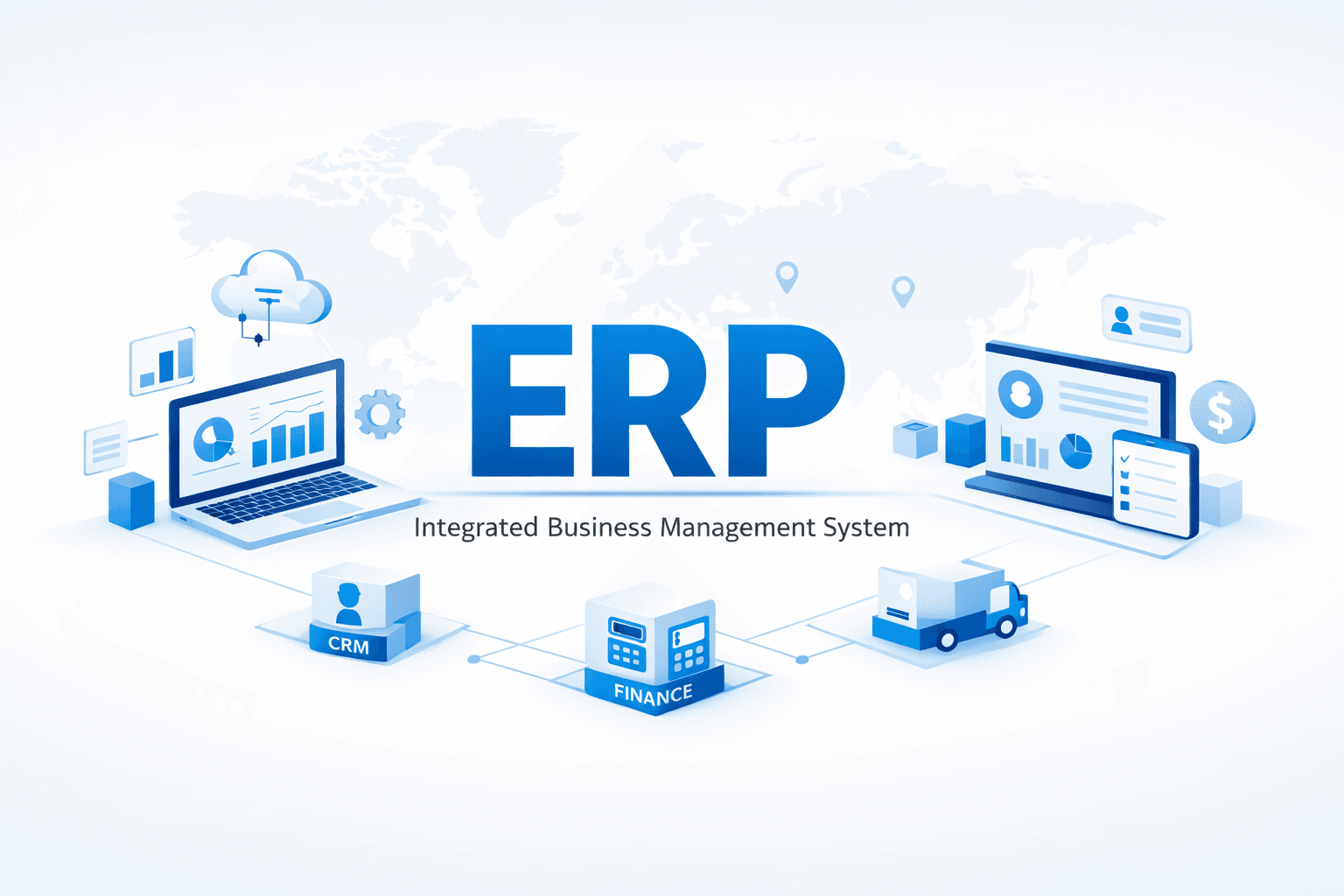
The company’s transition from Odoo to a custom‑built ERP platform is now complete. The new system centralizes all business functions, eliminates fragmented workflows, and provides real‑time visibility across departments. With 60 employees operating in 10 offices, the platform has become the organization’s digital backbone—connecting CRM, operations, finance, HR, sales, and automation into one intelligent ecosystem.
Before implementation, the company faced several structural and technical challenges:
Unclear Workflow Structures — Processes varied across departments and regions, leading to inconsistent data flow and duplicated efforts.
Governmental Banking Integration — Each country’s banking system required unique integration protocols and compliance layers, complicating financial automation.
Regional Legislation Variations — Diverse regulatory frameworks across Oman, UAE, and KSA demanded adaptable modules for HR, accounting, and taxation.
Cross‑System Communication — Existing tools lacked interoperability, making it difficult to synchronize CRM, finance, and operations data.
These challenges highlighted the need for a custom ERP architecture capable of harmonizing workflows while maintaining compliance across multiple jurisdictions.
The project was designed to achieve measurable outcomes that align with the company’s growth strategy:
Operational Efficiency — Automate repetitive tasks, unify workflows, and reduce manual workload.
Financial Accuracy — Enable real‑time accounting, automated billing, and compliance with regional banking standards.
Regulatory Compliance — Ensure adherence to local labor laws, tax codes, and financial reporting requirements.
Data‑Driven Decision Making — Provide instant insights and analytics for strategic planning.
Customer Relationship Enhancement — Strengthen CRM capabilities to improve satisfaction and sales performance.
Scalability & Integration — Build a modular framework ready for future expansion and third‑party integrations.
The ERP system now operates as a unified, intelligent platform that enhances efficiency, improves financial accuracy, strengthens customer relationships, and supports strategic decision‑making.
It has successfully resolved workflow ambiguity, achieved full banking integration across regions, and established compliance with multi‑country legislation—setting a new benchmark for operational excellence.